
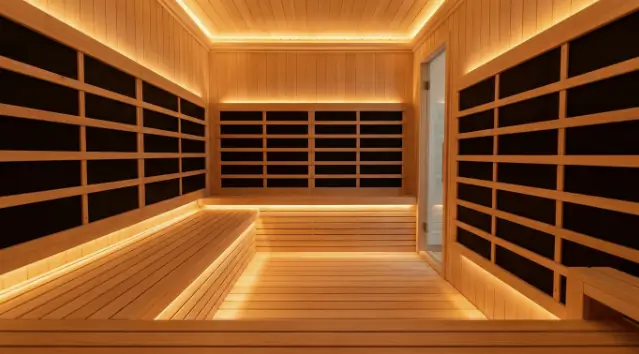
Ventilation and Airflow Basics for an Infrared Sauna for Beginners
An infrared cabin needs a small, steady exchange of fresh air, not the humidity-focused venting a steam sauna requires, because infrared heat warms the body directly and produces almost no water vapor. In practice this means cracking the door slightly or using a built-in vent during sessions longer than 20 minutes, avoiding a fully sealed cabin, and making sure the room around an indoor unit has normal air circulation. Skipping this is rarely dangerous in a short session, but it makes longer sessions feel stuffy and can shorten how long the panels and interior finish hold up.
Why Doesn’t Infrared Need the Same Venting as a Steam Sauna?
A traditional sauna generates steam by pouring water over hot rocks, which fills the cabin with humidity that needs somewhere to go. Infrared panels heat the body and surrounding surfaces directly without adding moisture to the air, so there is no humidity load to manage. The airflow question for infrared is really about fresh oxygen and heat regulation inside a small enclosed box, not moisture control, which is why infrared cabins can use much simpler venting than a traditional steam room.
How Much Fresh Air Does a Session Actually Need?
A cracked door, roughly an inch, or a small built-in vent near the top of the cabin is usually enough for a one- or two-person unit during a typical 20 to 30 minute session. The goal is a slow, continuous exchange rather than a strong draft, since too much airflow lets heat escape faster than the panels can maintain it. Manufacturers generally design vent placement into the cabin already, so the main job for a beginner is not blocking it with a towel, robe, or accessory shelf.
Is It Actually Unsafe to Sauna With the Door Fully Sealed?
For a short session under 15 minutes, a fully closed door in a well-built cabin is unlikely to cause a real problem. For anything longer, carbon dioxide from normal breathing can build up in a small sealed space faster than most people expect, which is part of why manufacturer instructions almost universally recommend a cracked door or open vent rather than a fully sealed cabin, regardless of session length. It costs nothing to leave the vent open, and there is no real benefit to sealing the door completely.
Do You Need a Powered Exhaust Fan?
Most compact cabins placed in a normal room with a door and some air movement do not need a dedicated exhaust fan. The exception is a cabin installed in a small, fully enclosed space, like a converted closet or a tightly sealed basement room, where a small inline fan, often in the 4 to 6 inch range and available for $30 to $80, adds meaningful airflow without much noise or installation complexity. Larger four- and five-person cabins used regularly by multiple people also benefit from active ventilation simply because more bodies in a session mean more heat and carbon dioxide generated per minute.
Where Should the Cabin Sit for the Best Airflow?
Placing a cabin against an exterior wall with a nearby window that can be cracked, or in a room with a functioning HVAC return, generally gives better passive airflow than a cabin wedged into a tight interior closet with the door shut. This matters more for basement installations, where air tends to move less on its own, than for a cabin in an open bedroom or converted garage with normal circulation.
What Actually Happens if Ventilation Gets Skipped?
The most common result is simply an uncomfortable session, heat that feels harder to tolerate than the thermometer reading would suggest, and a stuffy, slightly stale feeling that cuts sessions short. Over the longer term, consistently sealed sessions can also mean more moisture and heat stress on the interior wood or panel housing than the cabin was designed for, which is a maintenance issue more than a safety one but still worth avoiding. None of this requires elaborate equipment to fix, just a door left slightly open.
Setting Up a Simple Airflow Routine From the Start
A workable routine for most beginners is cracking the door or opening the built-in vent at the start of every session, regardless of length, and leaving the door fully open between sessions so the cabin can air out and dry. For anyone shopping for a first cabin, checking how a specific model’s vent is positioned, information usually listed alongside dimensions and wattage on retailer sites such as https://sweatdecks.com, is worth a quick look before ordering so the airflow setup matches wherever the cabin will actually sit.
What the Research Says About Heat Exposure and Airflow
Research on sauna bathing, including a 2018 review in Mayo Clinic Proceedings and a companion paper on the physiological effects of heat exposure, generally studies sessions conducted under normal, non-sealed conditions consistent with manufacturer guidance rather than fully airtight setups. The cardiovascular and relaxation associations reported in that research reflect typical sauna use, not an extreme or oxygen-restricted version of it, which is one more reason basic airflow during a session is worth treating as standard practice rather than optional.
What About Humidity and Condensation Indoors?
Even without the steam a traditional sauna produces, an infrared session still raises humidity slightly inside the cabin from ordinary sweat, and that moisture needs somewhere to go once the session ends. Leaving the door open between uses handles most of this on its own, letting the interior air out and the wood or panel surfaces dry before the next session. A cabin left sealed between uses in a humid climate can develop a faint musty smell over time, not from any leak or defect, just from moisture that never had a chance to escape. Wiping down the bench and floor after a session, part of the basic maintenance routine most owners settle into anyway, further reduces this since less residual moisture is left sitting once the door opens.
Basement installations deserve a bit more attention here than a cabin on an upper floor, since basements often run more humid to begin with, especially in summer. A small dehumidifier running in the room, separate from the sauna itself, can keep the surrounding air dry enough that the cabin’s own airflow does not have to work as hard between sessions.
Does Ventilation Change Between Indoor and Outdoor Installations?
An outdoor cabin benefits from ambient air movement that an indoor room does not automatically have, which is part of why outdoor units often need less thought given to airflow beyond the built-in vent itself. An indoor cabin depends more on the room around it, its own door, any windows, and general circulation, to keep fresh air cycling in and out. Beginners installing indoors, particularly in a basement or a small converted room, are the ones most likely to benefit from a supplemental fan, simply because outdoor air movement is not doing any of the work for them the way it does for a deck or backyard installation.
Frequently Asked Questions
Does an infrared sauna need a vent like a steam sauna does? Not in the same way. Infrared cabins produce little water vapor, but still need fresh air exchange to avoid a stale, overheated cabin during longer sessions.
Is it safe to sit in a sealed infrared sauna with the door fully closed? Most manufacturers recommend cracking the door slightly rather than sealing completely, especially for sessions longer than 20 minutes, to prevent heat and carbon dioxide buildup.
Do indoor infrared saunas need a dedicated exhaust fan? Most compact cabins do not, if the room has normal air circulation. Larger cabins or fully enclosed small rooms benefit more from a small inline fan.
How do you know if an infrared sauna’s ventilation is inadequate? Signs include a stuffy feeling well before the target session time, a lingering odor after use, or panels that seem to run hotter than expected.
References
- Cardiovascular and Other Health Benefits of Sauna Bathing: A Review of the Evidence, Mayo Clinic Proceedings, 2018
- Effects of heat and cold on health, with special reference to Finnish sauna bathing, American Journal of Physiology – Regulatory, Integrative and Comparative Physiology, 2018
- Benefits and risks of sauna bathing, The American Journal of Medicine, 2001
By Tobias Kern